Not rendering correctly? View this email as a web page here.
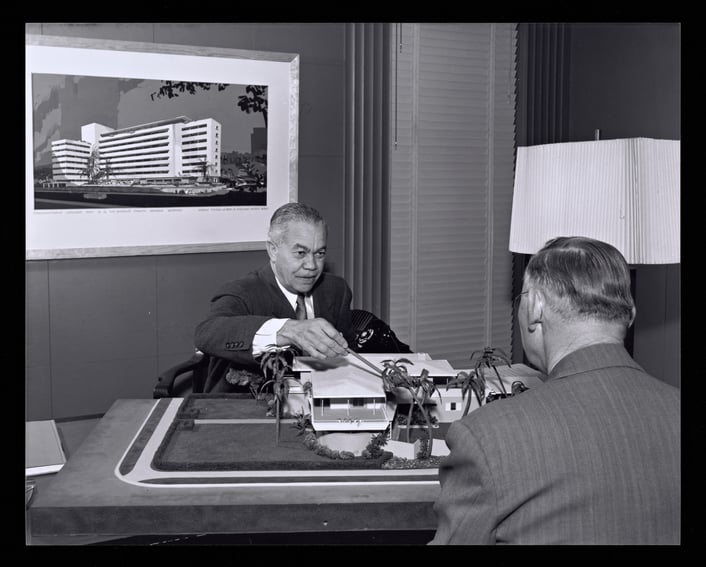
Scherer Monobeam Perspective of Transportation Project, mid- 20th century; Paul R. Williams, image courtesy LACMA
Dear DnA readers,

I hope you are doing well, especially after this exciting, sanity-restoring week in national politics.

Locally too, the ground has shifted. For the last couple of decades, Angelenos seem to have been in an existential struggle over competing urban visions. One is for a denser city supporting a pedestrian-oriented lifestyle, with low- to middle-income, rental and for-purchase multifamily housing centered on mass transit and seeping into single-family neighborhoods. The other is its opposite: the sprawling, suburban development that has proven so seductive, but inherently limiting to growth.

The first vision has been propelled largely by younger residents, and by many in the design and construction community, while the resistance has come more from older voters as well as homeowners who gain nothing but annoyances from expansion.

Nithya screenshot

Nithya Raman, screenshot from Thank You LA video at nithyaforthecity.com

Now the LA Mayor’s race has delivered a leader for the future-oriented vision: Nithya Raman, the MIT-minted urban planner and Silver Lake mom who got her start in local politics volunteering to alleviate homelessness in her district; and who believes in government’s capacity to improve lives, but ran on her frustrations at its failure to deliver.

Raman has a planning wonk’s fascination with the details, from the debate around single stair access to keeping count of the number of non-functioning streetlights. She is not simply a “DSA” Mayor. She also appears to be an Ezra Klein-style "Abundance," results-oriented, data-gathering, YIMBY Mayor. She is Mayor for apartment renters — and, yes, for apartment builders.

At a recent fundraiser hosted by Corsini Stark Architects, she told a room full of designers and planners that she will create an office of tenant protections within the housing department, but she will also reform “outdated zoning and planning codes,” cut the "red tape that has made building housing here in this city the longest, most expensive, most unpredictable task that you could undertake in LA,” and support development both private and nonprofit “that will allow more housing to be built." 

2225 Sunset, IMG_0523

2225 Sunset, a new, higher density development in Echo Park. Photo by Frances Anderton

Those two communities — renters and for-profit developers — are not always in sync, so time will tell how she navigates this and many other situations involving competing stakeholders (and that includes city council members). For now, she potentially brings the winds of change to the City of Angels.

This Saturday at Architecture Uncorked, we will talk about Raman’s win and what it means for building in LA. At that event, we will also unveil the winning Lautner-inspired cake! Next Thursday, the Westside Urban Forum will host a breakfast discussion about how the new mayor might impact housing.

Read on for details about that and many other Design Things to Do.

W4ET_CR032_Static Banners for markets 8.14.25-600x100-1

Design Things To Do

Top Pick: Paul R. Williams: Architect for Living

The Paul R. Williams archive, jointly acquired by The Getty Research Institute and the USC School of Architecture in 2020, is the gift that keeps on giving. After poring over its contents — some 35,000 plans, 10,000 drawings, and blueprints, renderings, photographs and correspondence relating to some 3000 projects — curators at USC, Getty and LACMA have mounted three exhibitions focusing on aspects of Williams’ prodigious and eclectic output.
12. Julius Shulman, Paul R. Williams Portrait

Paul R. Williams, Portrait by Julius Shulman; image courtesy LACMA

USC kicked off with this show on his multifamily housing, and now it’s the turn of LACMA, which will launch Paul R. Williams: Architect for Living at the Resnick Pavilion this Sunday, November 15th (Member previews: Friday, November 13th.) The exhibition, designed by Miami-based Studio Barnes, includes over 120 drawings, photos, and ephemera, spanning the launch of his office in the 1920s, on becoming the first Black architect licensed in the western United States, through to his “1952 dream house,” a stylish modern residence in a neighborhood that had until recently been barred to Black homeowners.

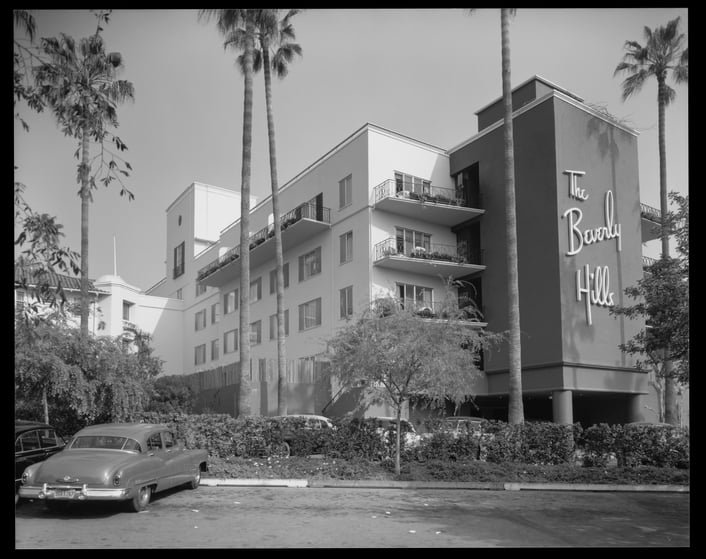
It also encompasses housing, community centers, futuristic transportation (see Scherer Monobeam, top of page) and hotels, including, of course, his remake of the Beverly Hills Hotel, below, with the logo he hand-scripted. Williams’s gift for conceiving and conveying easy livability — during a time that did not make it easy for him — is everywhere on display.
10. Beverly Hills Hotel, 1949, photo by Julius Shulman

Beverly Hill Hotel. Photo by Julius Shulman, 1949; image courtesy LACMA

Quick Picks

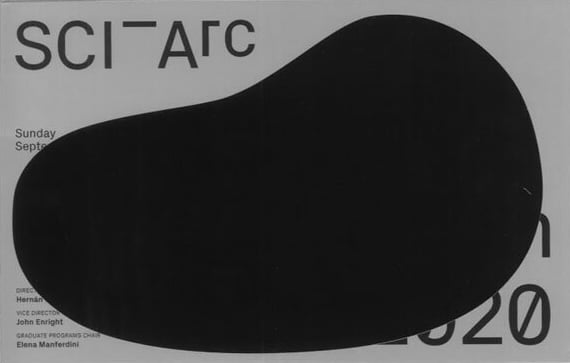
Since its founding in the 1970s, the breakaway architecture school SCI-Arc has embraced related disciplines, including graphic design. Opening this Wednesday, November 11th, 7:00 PM in the Kappe Library, you can see Kevin McMahon: Something from SCI-Arc: Six Decades of Graphics, an exhibition of posters and printed ephemera from the Kappe Library’s archival collections, by designers including April Greiman, Coy Howard, and Marija Radisaljevic, below. McMahon, longtime librarian at SCI-Arc, curates the show. The opening is part of the school’s Building Forward: Alumni/Three Days of Ideas, Architecture & Community, which includes a panel stuffed with eminent alumni.
1973.2020-exhibit-image_WEB

Invitation to Graduation 2020, Marija Radisaljevic, Offset lithograph postcard.. Courtesy SCI-Arc.

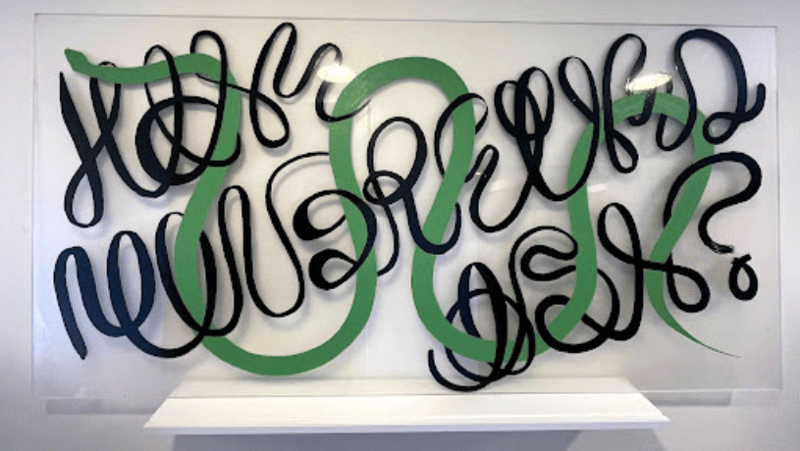
Woodbury School of Architecture at University of Redlands LA also flexes its graphic artistry muscles with Passing Notes, by Celia Hollander, a show combining past works that Hollander derived from "a sculptural drawing machine activated by the movement of people" with "a series of cursive text-based works on plexiglass and paper." It is in the school’s Wedge Gallery at 7500 Glenoaks Blvd, with a public reception on Friday, November 13th, 6:00–9:00 PM.
Woodbury

Image courtesy Woodbury School of Architecture

AIA/LA holds its ticketed fall architecture tours on several days from November 13th — 21st, with destinations ranging from Johnson Fain’s Citrus Commons, a new mixed-use neighborhood centered on the former Sunkist Headquarters Building in Sherman Oaks, to three projects (in one day) by BA Collective (formerly Belzberg Architects), including the Sarbonne residence in Bel Air, below.
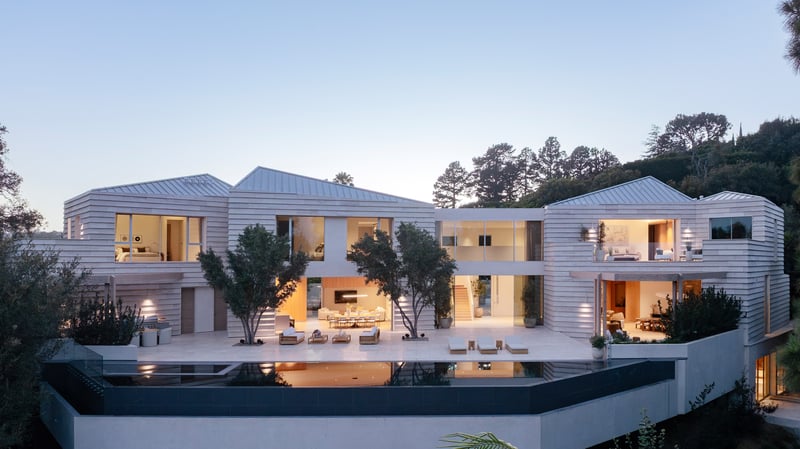
Sarbonne-BA-Collective-1-©MikeKelley-Adriana-Castro-Lizarbe-1

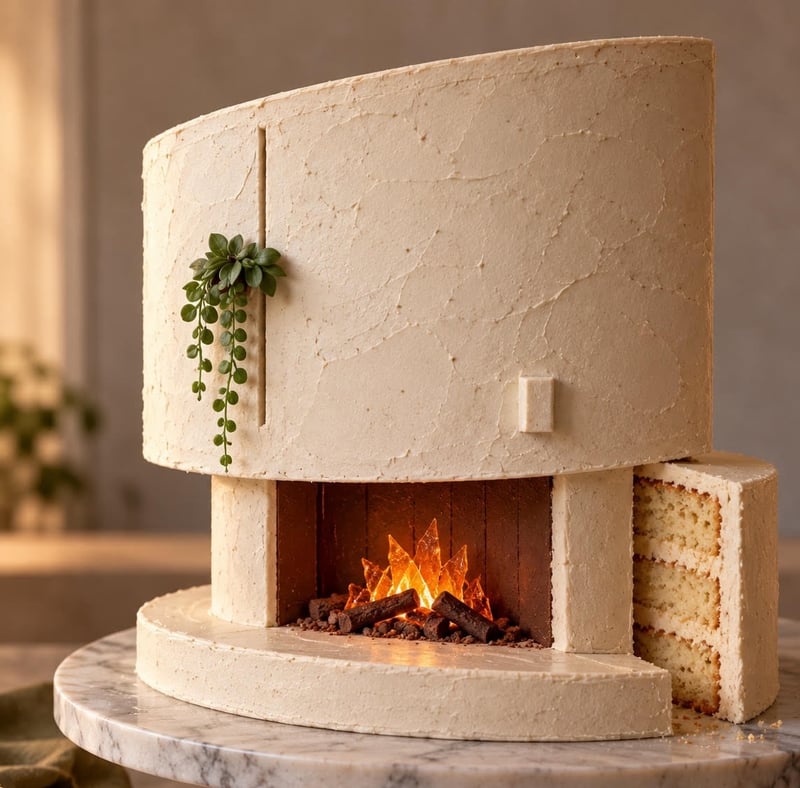
Rendering of Silvertop Hearth Cake, created by Allise Matsuno

Join FORT: LA’s Architecture Uncorked this Saturday for an action-packed 90 minutes of trivia, talk, wine-tasting — and a viewing of the five finalists in the Cantilever and Crumb, Sugar and Structure: A John Lautner Bake-Off, including the Silvertop Hearth Cake, by Allise Matsuno, below. Then comes on-stage talk, kicking off with a chat with Christopher Rhie about LA's new mayor, who just might be able to take on city dysfunction and give LA a much-needed pep in its step. The free event (added fee for victuals) takes place November 14th, 5:00–6:30 PM, at Barnsdall Gallery Theater, 4800 Hollywood Boulevard.
Alissa Matsuno, Silvertop-1

Rendering of Silvertop Hearth Cake, created by Allise Matsuno

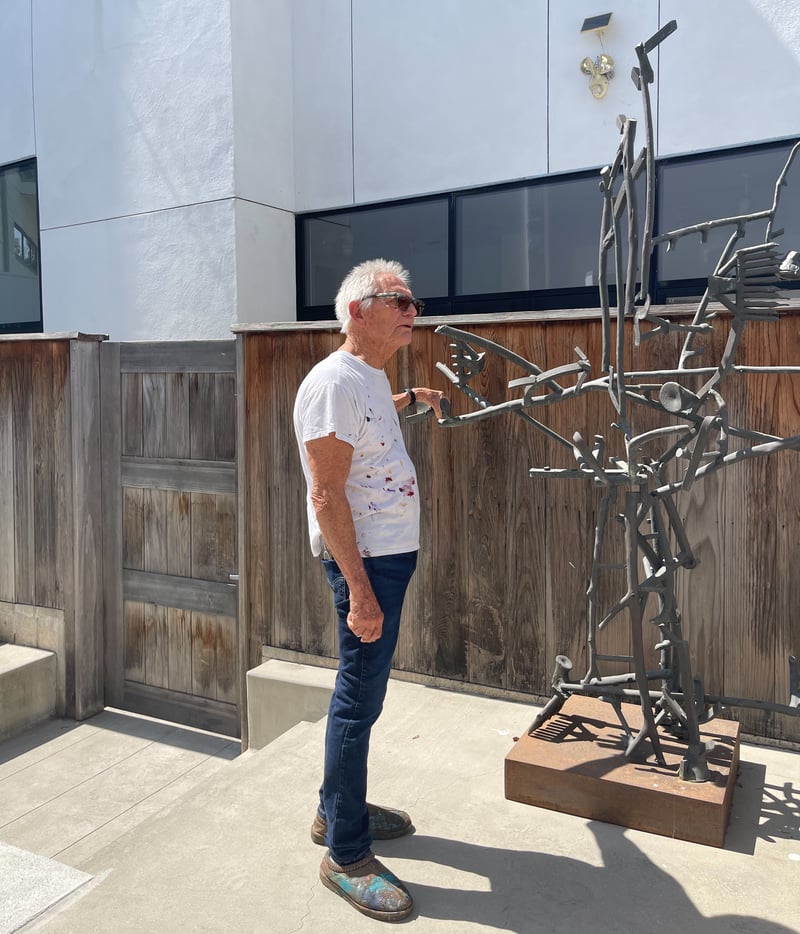
Low-rent Venice was put on the map in the 1970s by artists including Larry Bell and Charles Arnoldi, below. Arnoldi also invested in the area, along with the late Frank Gehry, and, as often happens when artists/architects help revive a neighborhood, the property prices skyrocketed. The young Venice Heritage Museum celebrates Venice's past and will raise funds next Friday, November 20th, 5:30 PM, at Made In Venice - An Evening with Charles Arnoldi & Larry Bell, at Arnoldi's studio. The irrepressible Arnoldi and Bell will share “stories of the studios, the friendships, and the remarkable period that brought them together in Venice.” While there, check out Arnoldi's skill as an interior designer/builder.
Chcuk Arnoldi, IMG_3488 copy, cropped

Chuck Arnoldi, 2025, Photo by Frances Anderton

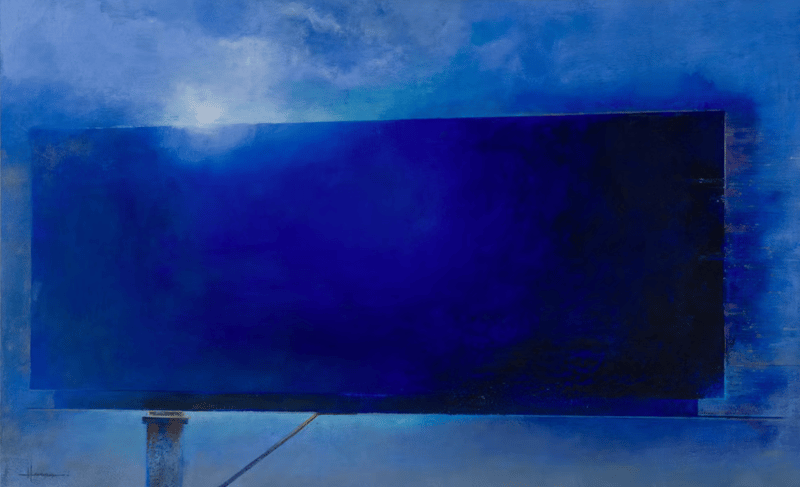
Eric Hesse, a decorative painter/gilder and fine artist who works with Maria Trimbell, also makes encaustic paintings, many of LA billboards. As he has said of his vibrating images, when they are “wrested from their role as didactic messengers of commerce, they become transportive rather than transactional.” Hesse will show his latest works at Billis Williams, the self-described “Painting focused. Technique driven. Woman owned.” gallery at 2716 S. La Cienega Blvd., Los Angeles, 90034. The public opening is on Saturday, November 21st, 3:00–6:00 PM, and the show runs through December 19th.
Screenshot 2026-11-09 at 2.41.38 PM

Foreshadow, 2026. Image courtesy Eric Hesse

email(600x74)

What I'm Digging

Thinking that... data centers might be a bit more popular if they were given facade treatments by the gifted Elena Manferdini, who chose to wrap an electrical substation expansion in Crystal City, Virginia, in colorful custom tiles and painted precast concrete and anodized aluminum, with LED lighting at night. Manferdini told Architect’s Newspaper that the commission from Dominion Energy, entitled inVisibile, "represented something of a ‘dream project’ for her, a chance to work on a building typology that is needed but ‘you might not like to have it next door’.” 

2.-Dominion-Energy_Overall-elevation

inVisibile, Northern Virginia, Atelier Manferdini, 2026 (Courtesy Atelier Manferdini) 

Love... that our feral neighbors have already found their way to the Wildlife Crossing, without waiting for the ribbon cutting next month! National Wildlife Federation's Save LA Cougars snapped a coyote ambling across the Agoura Road structure late last month. SF Gate notes that “technically, a western fence lizard was the first animal to use the crossing,” and that cougars — which first inspired the Wallis Annenberg Wildlife Crossing — have been spotted walking next to it. What joy to learn that this animals-only bridge has already started delivering on its promise. 

Coyote on Wildlife crossing

Image courtesy savelacougars.org


What I'm NOT Digging

Hot Air

There is something about air-conditioning that brings out the moral crusader — on both sides. Americans seem jubilant when Europeans concede, after extreme summers, that they wouldn’t mind some AC, while many in the old countries still resist, on environmental and cultural grounds. Now Westsiders, so long blessed with sea breezes, find their need for mechanical cooling is growing.

This is simply sad. It’s sad that we’ve jacked up the earth’s temperatures and turned our cities into heat islands. And it’s sad for anyone who cares about architecture. When you can cool buildings with mechanized ventilation, you don’t need to add any of the features that passively cool them: shutters, trees, overhangs, courtyards, screens, arcades, openable windows and cross-ventilation; in sum, all the elements that give buildings delight. The result can be bland, boxy buildings (expensive ones too, as experienced by DWP customers). 

I recently wrote about lovely, passively cooled buildings in hot countries for BuildingGreen magazine, such as the Rajkumari Ratnavati Girl’s School in Rajasthan, India, below, by Diana Kellogg Architects. View the story online, or an extended version at this link.

India school

Photo by Vinay Panjwan

Well, that's it for now. Thank you as always for reading this newsletter. Send design news, questions, and comments to francesanderton@gmail.com. Get back issues here. Remind your friends to sign up for the newsletter here.

Yours with very best wishes,
Frances

W4ET_CR032_Static Banners for markets 8.14.25-600x74 (2)-1
Let KCRW be your guide! We’re the friend you trust to introduce you to new experiences, sounds, and ideas. Become a KCRW member.