Author’s note: I’m Arnie Seipel. I spent years covering politics and policy for NPR in Washington, D.C. Now, I’m the content chief at KCRW. With this weekly analysis of political news, I want to help you keep your head on straight when the onslaught of stories each week has you spinning.
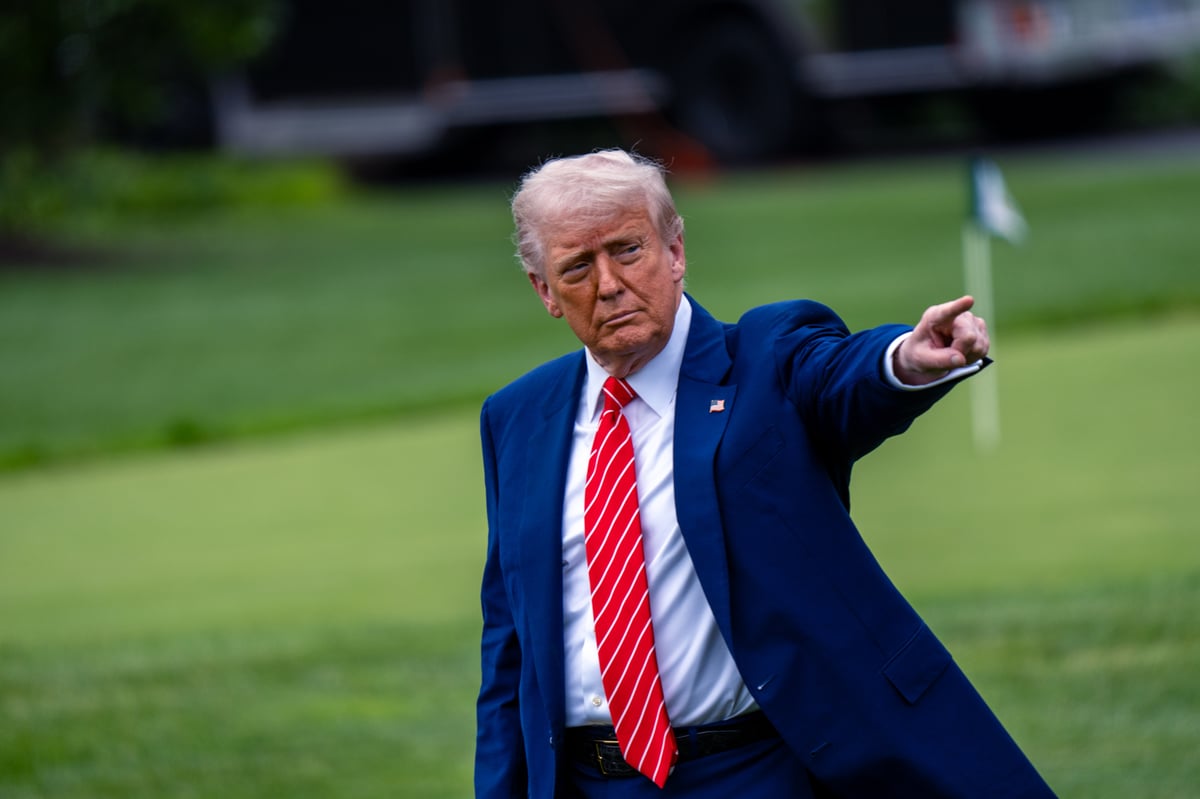
Photo by: Andrew Leyden/Shutterstock
President Trump told lawmakers this week what his top priority is. He didn’t say affordability, or the war with Iran, or ending the partial shutdown of the Department of Homeland Security.
It’s passing the voter ID bill to end all voter ID bills.
The Safeguard American Voter Eligibility (SAVE) America Act aims to protect the country from voting by non-citizens.
How urgent is this problem? It’s not. It’s already illegal for non-citizens to vote.
The Bipartisan Policy Center says that when Utah reviewed the two million people on its voter rolls recently, it found one person who is not a citizen on the rolls, and no instances of that person actually casting a vote. Voter roll verifications nationally have found evidence of non-voter registration in 0.04% of cases.
And yet, Trump is threatening to sign no other bills until this one reaches his desk. He’s put particular pressure on the Senate, where Republicans would have to change the rules to avoid a Democratic filibuster. He’s threatening to withhold an endorsement in the Texas GOP Senate primary runoff, drawing out that intraparty battle and potentially putting Democratic Senate control in the realm of possibility.
Requiring a photo ID to vote is massively popular. A Pew Research Center poll last year showed that large majorities of Republicans and Democrats support it, even though studies have shown these laws disproportionately create barriers for people of color to vote. In part, people respond positively to the idea that you have to show a photo ID for so many things that seem less precious than election security, like buying alcohol, despite the lack of voter fraud.
The bill Trump is pushing would go beyond voter ID laws that already exist in many GOP-run states, where a driver’s license suffices. The SAVE Act would require documented proof of citizenship, like a birth certificate or an unexpired passport. (No, even your hard-won REAL ID won’t work.)
About one in ten people do not have possession of their birth certificate. More than half don’t have an active passport, and this falls disproportionately on Republicans. Acquiring these forms of ID would put people in the position of having to pay money to be able to exercise their constitutional right to vote.
The bill would also massively restrict voting by mail. Unrelated to elections, Trump also wants to include restrictions on gender-affirming care for trans youth and trans women’s participation in sports.
Congress isn’t going along with this. Senate Majority Leader John Thune, R-S.D., is planning to go ahead with a vote next week without changing Senate rules. In other words, he is not going to rescue the SAVE Act from certain defeat at the hands of Democrats.
The bill may not even be able to get through the House as written, where it could theoretically pass with only GOP votes.
Lawmakers may not be concerned because Trump’s promise to not sign any other bills until this one passes is an empty threat. If another bill passes and 10 days (excluding Sundays) go by without a presidential signature, the bill becomes law as long as Congress stays in session.
As this bill goes down, though, it is only one of several fronts in Trump’s quest to control elections that are active just this week.
The DOJ is deepening its campaign to make a case out of the exhaustively disproven allegations that the 2020 presidential election was rigged.
The Democratic National Committee filed in court this week to find out if Trump plans to send federal officers out to polling places in November, with widespread concerns that ICE deployments were a test run for voter intimidation this fall.
The president’s conspiracy theories about non-citizens voting in significant numbers could be a false justification for a move like that.
THIS WEEK’S OPEN TABS
Another war in the Middle East has a lot of us thinking about the Bush years. The Dispatch asks why we’re not seeing the punk rock dissent from those early days of MoveOn.org
What about China? This analysis from Chatham House explains why Beijing is holding back as the U.S. has attacked two of its allies in Iran and Venezuela. China wants to look like the stable superpower.
NPR: The Trump DOJ is giving guns back to felons, including one alleged fake elector.
I’m a big fan of shows like The Crown, that serve up an embellished (and soapier) version of the truth, and I’m usually Googling what’s real and not during the episodes. I was really struck by Darryl Hannah’s essay in The New York Times about how she’s demonized with impunity in the new FX miniseries about JFK, Jr.
Take care,
Arnie
If someone forwarded this to you and you want to subscribe, click here.
Disclaimer: This newsletter, “KCRW's Steady State,” is not affiliated with The Steady State, a nonprofit 501(c)(4) organization founded in 2016 and comprised of more than 390 former senior national security professionals. They advocate for constitutional democracy, the rule of law, and the preservation of America’s national security institutions.

.png?upscale=true&width=1200&upscale=true&name=email(600x100).png "email(600x100)")