Hi friends,
The passing of Juan Atkins felt seismic. His influence runs through so much of the electronic music we hear today, and I immediately thought of John Tejada as someone who could put that legacy into perspective.
I asked John to reflect on what Juan changed, what he made possible, and the personal impact his music had on John’s own life.
I’ll let John take it from here.
– Ale
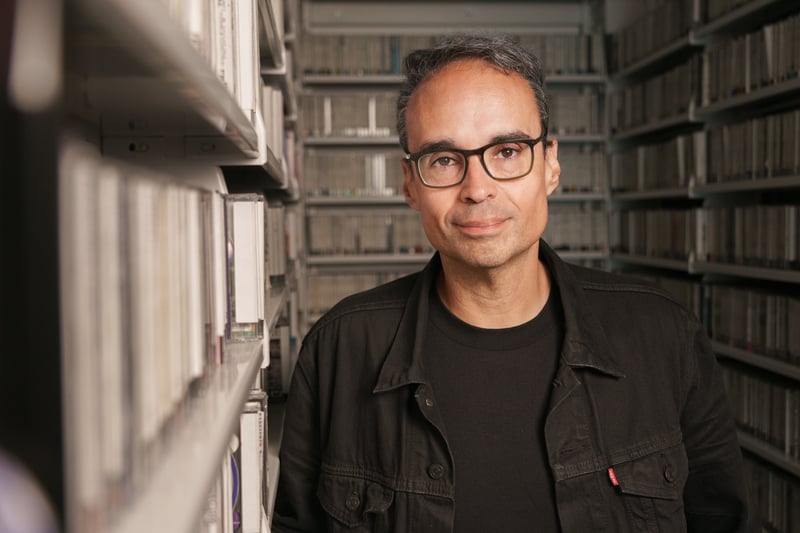
On October 31, 2026, we learned that Juan Atkins, the Godfather of Techno, had passed away at 64. For decades, he inspired countless creative minds to make electronic music. His loss sent shockwaves through the music community worldwide.
Atkins is widely credited with helping invent techno in his hometown of Detroit in the early '80s. He began with Cybotron, his collaboration with Rick Davis, releasing Alleys of Your Mind, a record championed on Detroit radio by the legendary Electrifying Mojo. His influence soon spread far beyond the city, helping establish Detroit techno as a new musical language, crystallized for a wider audience by the 1988 compilation Techno! The New Dance Sound of Detroit.
Juan was part of the Belleville Three alongside Derrick May and Kevin Saunderson, but he was the one who really got things started. He taught Derrick and Kevin how to make records, from arranging and recording to sound design and drum programming. Together, they changed the musical landscape forever.
His influence went far beyond techno, reaching house, electro, hip-hop, and generations of electronic artists around the world. Even if you’re unfamiliar with his name, there’s a good chance you’ve heard his work. Sir Mix-a-Lot’s “Baby Got Back” features a loop from his Channel One track “Technicolor,” while Missy Elliott’s “Lose Control” is built around a sample from Cybotron’s “Clear.”
In the early '90s, Juan began performing in Berlin and releasing music through Tresor, the club and label spearheaded by Dimitri Hegemann. In my view, that connection played a major role in carrying Detroit techno throughout Europe.
It’s difficult to overstate Juan’s importance to modern electronic music. Beyond the records themselves, he inspired thousands of young producers to make music and, just as importantly, showed them they could release it themselves. Metroplex, the label he launched in 1985, made independence feel possible.
I had many moments when an Atkins production changed my understanding of what electronic music could be. Hearing “Clear” or “R9” for the first time felt impossibly futuristic. Then records like I Wanna Be There and The Passage showed me how soul and vulnerability could live inside the sound of machines.
Once, in the '90s, I was watching Juan DJ at a club when I heard him play one of my tracks. It had been released under an anonymous alias, without my name credited. I went up afterward and said, “Hey, you played my track!” He said, “I did? Which one?” When I told him, he looked at me and said, “You need to put your name on the good ones.”
I later had the honor of sharing the stage with him a couple of times. While putting together a two-hour retrospective for my November 7 KCRW show, I was overwhelmed by just how many times Juan’s music had changed my life.
- John Tejada


