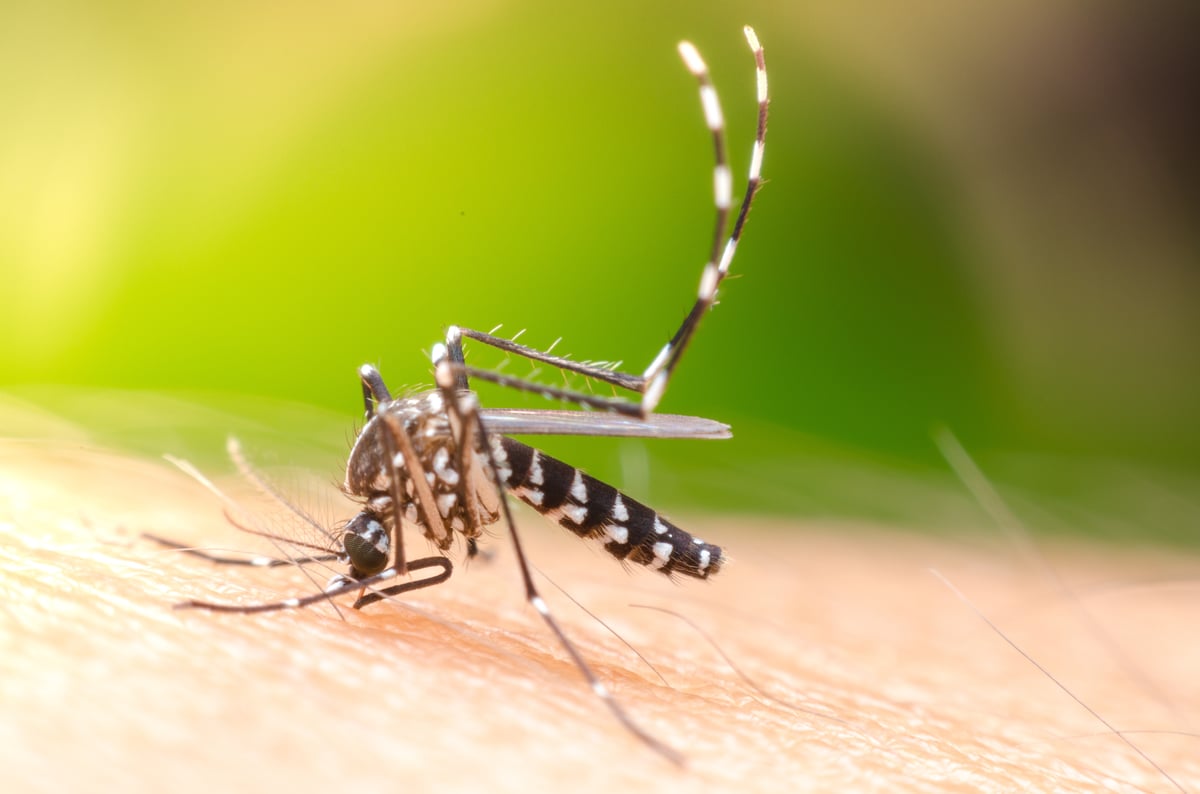
Mosquitoes Are Winning
Most of us hate mosquitoes. For generations, scientists have tried to eradicate them. But our best efforts have failed. Mosquitoes are spreading to new places and adapting in ways that make them increasingly difficult to control.
Take insecticides. Mosquitoes can evolve resistance remarkably quickly. Geoff Attardo, a professor of entomology at UC Davis, explains why:
“One female can lay 70 to, you know, 80 eggs per clutch, and she can do about three of those in her lifespan. So, if you kill off 99% of them, you still have enough that they can start a new population carrying the genetics associated with that resistance.”
This matters for human health. Malaria still infects hundreds of millions of people each year, and infections are increasing. At the same time, the Trump administration has sharply cut U.S. programs fighting malaria overseas.
And now there’s a new threat in Africa: Anopheles stephensi, a malaria-carrying mosquito from South Asia that was first detected in Africa in 2013 and is rapidly spreading across the continent.
What makes stephensi particularly worrisome is that, unlike many malaria mosquitoes, it thrives in cities rather than rural areas. It can breed in almost any small container of standing water.
“If you leave a Gatorade bottle that's dried out, but it's got the sugar left over in the base, that's plenty if you add water to it,” says Attardo. “But you get bacterial growth, and then the mosquitoes lay eggs in there, and there's no predators.”
Mosquitoes can even change when they bite. Some malaria-carrying mosquitoes have shifted to feeding earlier in the day, before people retreat behind window screens or sleep under insecticide-treated nets.
Mosquito-borne diseases aren’t just a problem overseas. The Aedes aegypti mosquito, which can transmit dengue and Zika, has lived in parts of the United States for centuries. They probably arrived in the US aboard transatlantic slave ships in the 1600s. But Geoff Attardo says they are relatively new to California.
“I was getting bitten by Aedes Egypti last night, actually, outside of my house, so we have them here in Davis (CA) now. They weren't in California prior to 2013, and then they were established in the Southern California area, like L.A. Orange County.”
Aedes aegypti is particularly well suited to living in places like California. Its eggs can survive dry conditions for months, then hatch when water returns. Bird baths, flowerpots and other ordinary objects become nurseries. They can even spread in something as innocent as a new plant.
“If you go to a nursery and you pick up a plant and you bring it home, you've sort of like got a starter kit for Aedes aegypti with the plant,” says Attardo.
And like stephensi, aegypti is mainly a daytime biter.
For decades, we’ve largely fought mosquitoes with insecticides and other technologies designed to kill or sterilize them. But mosquitoes keep adapting.
Maybe we’ve been thinking about mosquito control all wrong.
Next week, we’ll look at a surprisingly old approach that scientists believe holds great promise.
— Dr. Michael Wilkes with a Second Opinion

@2x.png?upscale=true&width=1200&upscale=true&name=QEEmail(600x100)@2x.png)


