Author’s note: I’m Arnie Seipel. I spent years covering politics and policy for NPR in Washington, D.C. Now, I’m the content chief at KCRW. With this weekly analysis of political news, I want to help you keep your head on straight when the onslaught of stories each week has you spinning.
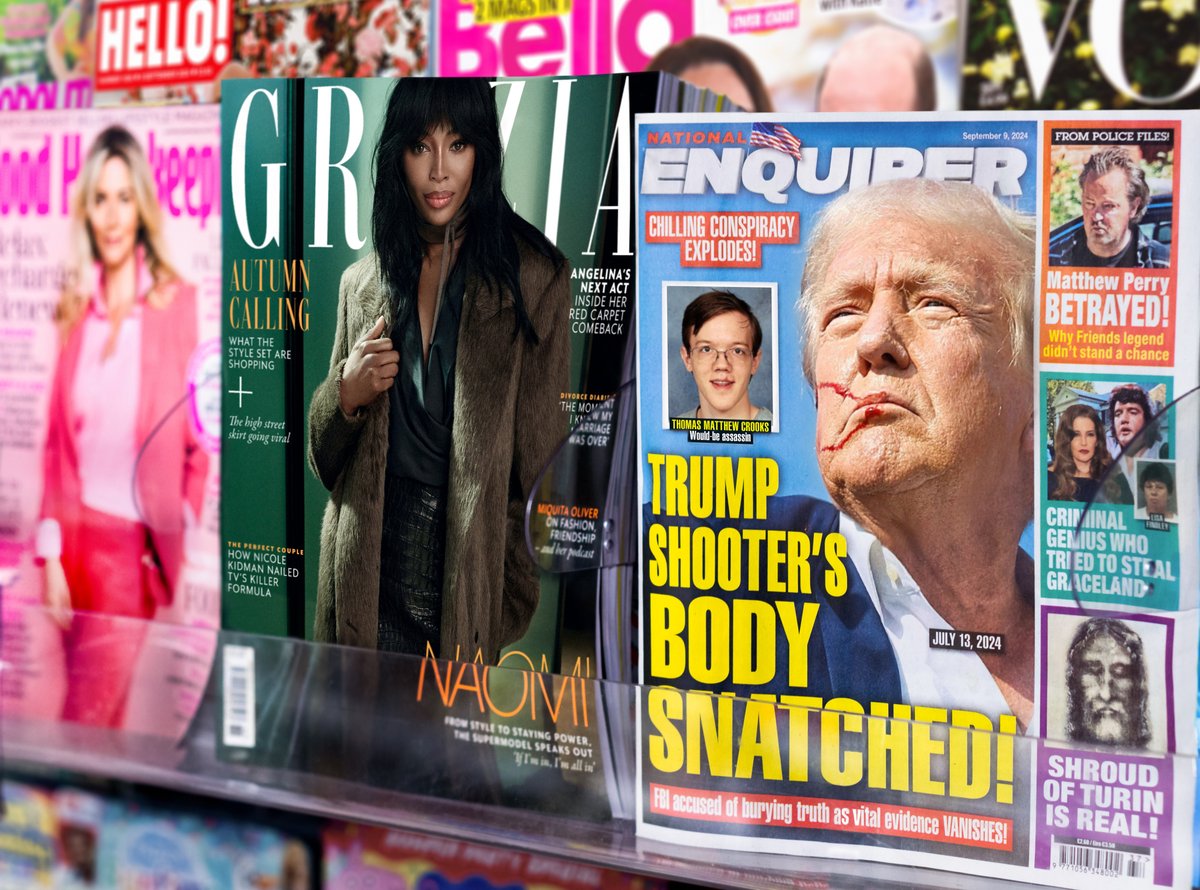
Photo by Shutterstock
Hi there -
There is no bigger problem we have faced as a country over the last decade than losing any shared sense of truth. All of our other problems cannot be addressed without a common understanding of facts.
It’s why I write this newsletter and why I’ve been tearing my hair out since the immediate aftermath of the shooting at the White House Correspondents’ Dinner became awash in conspiracy theories.
Donald Trump has been an incredible purveyor of conspiracy theories and accelerant of misinformation; his lies about the 2020 election and empowering the QAnon movement are the most potent examples.
I’ve been thinking about conspiracy theories a lot lately. Last week, I shared a Wired story about MAGA followers coalescing behind the conspiracy theories around Trump’s attempted assassination in Butler, Penn., in 2024.
It’s a really interesting story because it represents Trump’s conspiratorial chickens coming home to roost.
There’s also the recent series of deaths and disappearances of government scientists. The public prominence and corresponding theoretical connection between those cases was actually raised by internet-borne conspiracy theories. What got the attention of the FBI is that the disappearances themselves are a disturbing fact pattern. But the speculation about why or how these deaths and disappearances have happened is coming from people with no close knowledge of the situation.
Then on Saturday, we had the shooting at the White House Correspondents’ Dinner.
Immediately, social media and private text chains (including some of my own) lit up with people asserting that this must have been staged.
There is literally no evidence that Trump has staged an assassination attempt against himself. Ever.
There is a lot of suggestive questioning and ideas about possible motives to do this, but no one has presented any actual evidence that it happened or how it might have happened.
Do these conspiracy theories come from a real belief that Trump would stage attempts on his own life for political gain? (The cynicism there is easy to understand.) Could it be a mix of payback and schadenfreude — fanning dark conspiracy theories as retribution because Trump has himself fanned so many conspiracy theories? It’s likely a bit of everything that’s lifting conspiracy theories into mainstream discourse.
Questions are fine. We should seek out answers. But the more people openly dabble in conspiracy theories that disregard factual evidence, the more permission we give each other to perpetuate any misinformation.
Conspiracy theories have real-world implications. The Pizzagate episode that emerged from QAnon led to actual gunfire in a Washington, D.C., restaurant. Foreign adversaries like Russia and Iran love to promote them to amplify divisions among Americans and distrust in the American government.

kcrw-app/Win%20Tab%20Generic/WinTab_App%20Banner%20Suite-8-email%20(600x100).png?upscale=true&width=1200&upscale=true&name=WinTab_App%20Banner%20Suite-8-email%20(600x100).png "WinTab_App Banner Suite-8-email (600x100)")
kcrw-app/Win%20Tab%20Generic/WinTab_App%20Banner%20Suite-9-email%20(600x74).png?upscale=true&width=1200&upscale=true&name=WinTab_App%20Banner%20Suite-9-email%20(600x74).png "WinTab_App Banner Suite-9-email (600x74)")
kcrw-app/Win%20Tab%20Generic/WinTab_App%20Banner%20Suite-9-email%20(600x74).png?upscale=true&width=2400&upscale=true&name=WinTab_App%20Banner%20Suite-9-email%20(600x74).png "WinTab_App Banner Suite-9-email (600x74)")