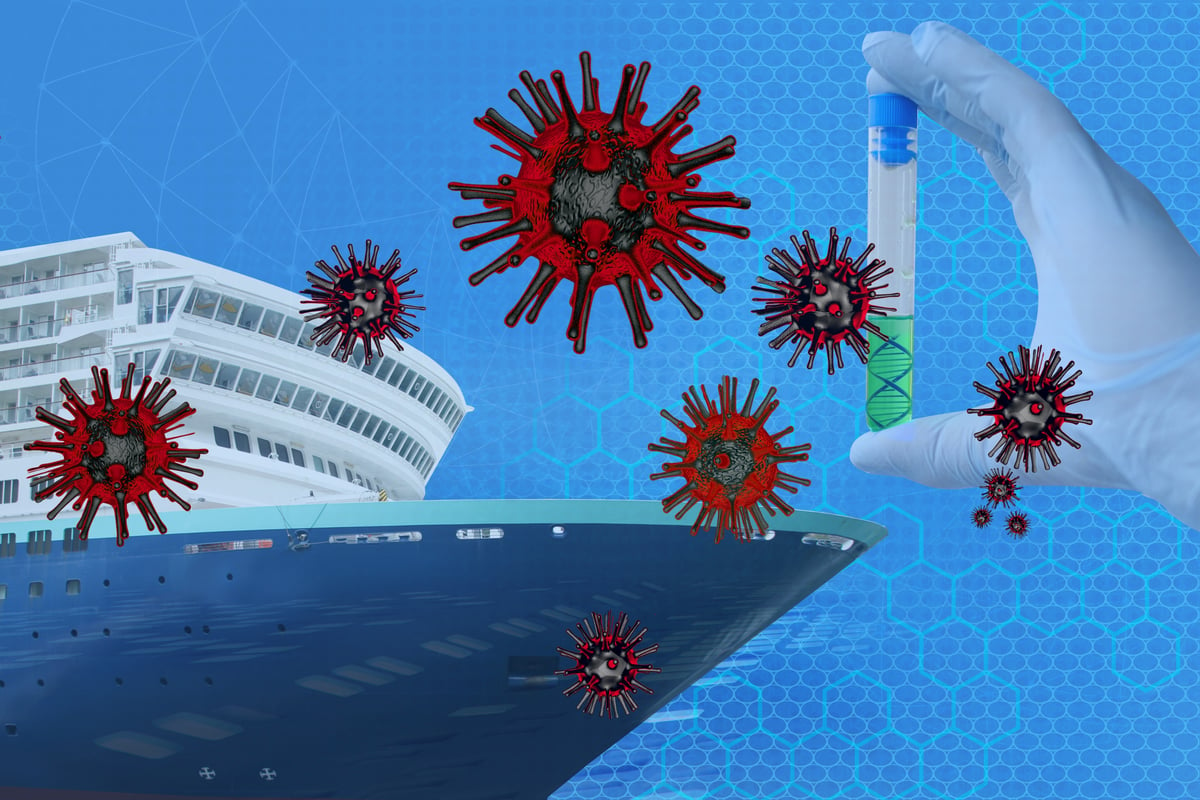
A Ship, a Virus, Nine Countries.
And We Weren't There.
Three people are dead. More are sick. The outbreak on a small cruise ship that left Argentina in April shows how interconnected the world is: people with people, but also people with animals. As of this week, the hantavirus has spread to nine countries. This strain of the highly lethal virus is the only one that spreads from person to person.
Stopping it requires a global network. South Africa ran the first lab test. Switzerland identified additional cases. Argentina traced the index route. The UK notified the World Health Organization (WHO).
Dr. Tom Frieden is an expert in public health and was formerly the Director of the US CDC for eight years.
“No country could have handled an outbreak this complex alone. Not the U.S., not any other country.”
Investigators are now doing the painstaking work of epidemiology. That means interviewing every passenger. Mapping who sat near whom, and for how long. Charting who got sick and when. Building a precise timeline that shows exactly how the virus moved through the ship is slow, meticulous work. And it depends entirely on countries sharing data freely with each other.
American doctors who treat returning travelers right now are relying on the WHO’s case definitions. American labs are using WHO-shared genome sequences. American health officials are using WHO contact-tracing data to find exposed passengers who flew through U.S. airports. Dr. Frieden says:
“WHO holds this network together. If it didn’t exist, we would have to invent it. And, we walked away.”
The U.S. left the WHO a year ago because the Trump administration claimed it was biased and costly. We stopped paying our dues. We cut coordination overnight. Dozens of American doctors who ran the WHO’s global immunization programs were pulled out in a single day.
That kind of betrayal has a cost. Other countries noticed. Partners who depended on the United States are now making other arrangements. Rebuilding that trust will take years — not months. As one senior public health official put it, the U.S. has shown itself to not be trustworthy. That is a hard thing to say about the country that built the global health system. But it’s true.
The damage here at home is just as real. The CDC has been hollowed out. More than 2,500 staff are gone. Scientists who spent careers building outbreak response capacity have left.
Dr Frieden says we need to make a U-turn.
“We have to rebuild the CDC. Rejoin the World Health Organization. The sooner we get started, the safer we will be.”
The current outbreak is small. The public risk right now is very low. But if not hanta, then another lethal illness could spread, and that would be catastrophic. We are far less ready for that possibility than we were eighteen months ago.
We built the global health system. Then we walked away from it. The virus doesn’t care about our politics. It will find the gaps we have created.
— Dr. Michael Wilkes with a Second Opinion
@2x.png?upscale=true&width=1200&upscale=true&name=QEEmail(600x100)@2x.png)


